Tag Archives: Abandoned Schools

Cluain Chumhra National School, Cluain Chorta townland, Co. Kerry

Cluain Chumhra National School, Cluain Chorta townland, Co. Kerry

(dated: c.1910 – 1920)

NGR: 050749, 100942

The Dingle Peninsula (or Corca Dhuibhne) in Co. Kerry stretches some 30 miles (48 km) into the Atlantic Ocean from Ireland’s south-west coast, and is a popular spot for holiday makers. The peninsula is dominated by mist-covered mountain ranges that form its spine, running from the Slieve Mish range to Mount Brandon, Ireland’s second highest peak. The coastline consists of steep sea-cliffs, broken by sandy beaches, with two large sand spits at Inch in the south and the Maharees to the north. Off the west coast lie the Blasket Islands; inhabited until 1953 when the last remaining islanders were  forcefully evacuated to the mainland on 17 November by the Irish government. It is an area of outstanding natural beauty, and despite a busy tourist season, it is a peaceful place that retains it’s rural feel.

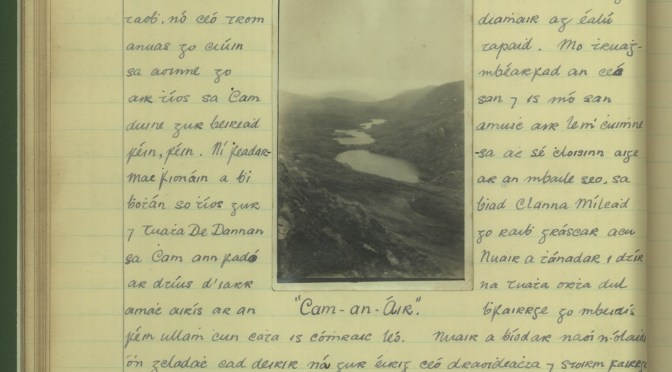
The principal town on the peninsula is Dingle; a major fishing port in Ireland, with the industry dating back to about 1830. The fishing industry brought the railways to the town, and Dingle was formerly the western terminus of the narrow gauge Tralee and Dingle Light Railway. The railway station opened on 1 April 1891, closed for passenger traffic on 17 April 1939 and for regular goods traffic on 10 March 1947, finally closing altogether on 1 July 1953, by which time a cattle train once per month was the sole operation. The railway line weaved along the south coast of the peninsula on it’s way from Tralee, crossing a flat, low-lying area between Lispole and An Cnoicin known as Droichead An Imligh (Emlaghmore Bridge). It is adjacent to the former railway line and the modern N-86 road in the townland of Clooncurra ,that you’ll find an early 20th century school house no longer in use.
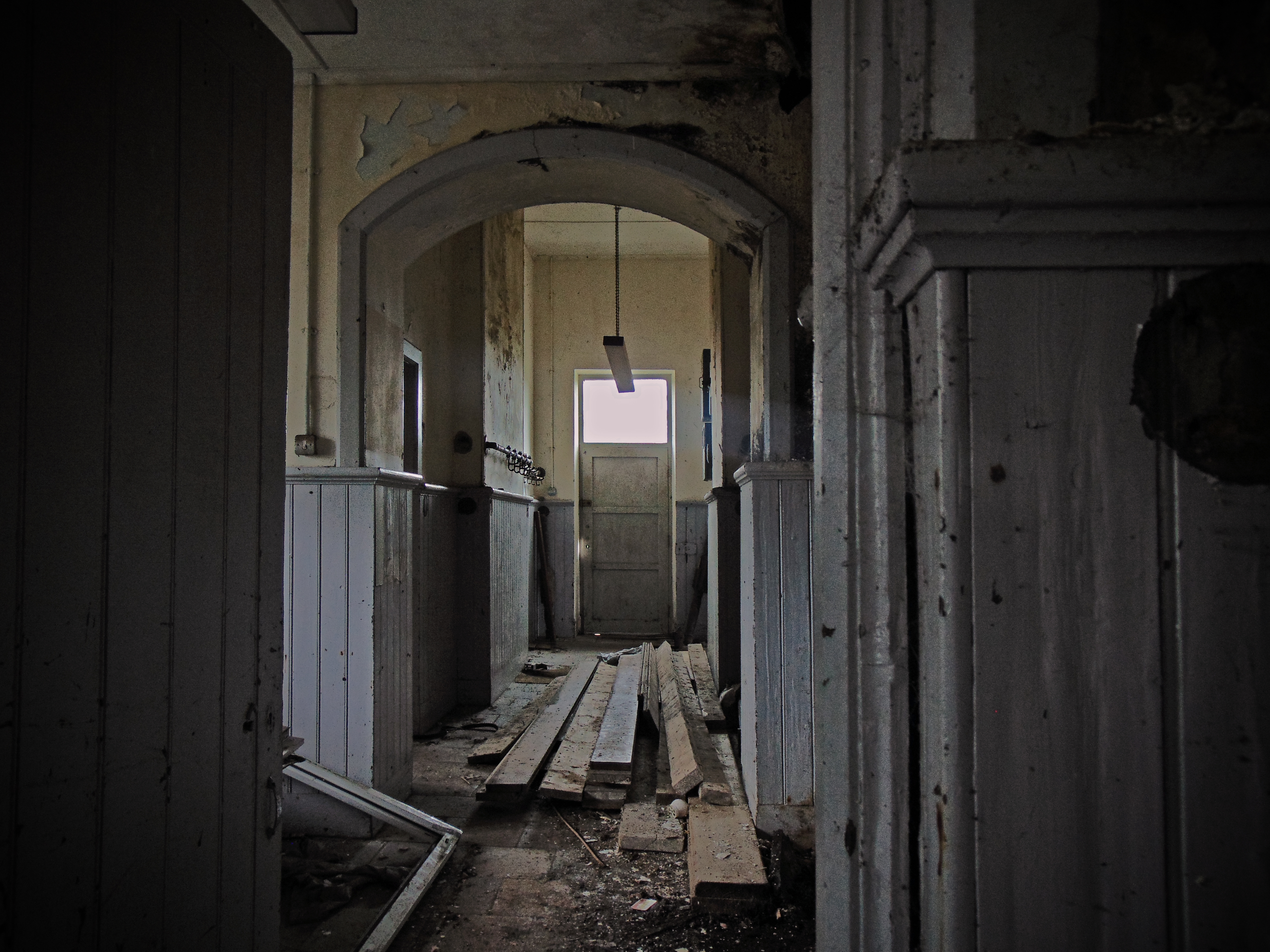
Clooncurra National School, Co. Kerry 1910-1920

Continue reading Cluain Chumhra National School, Cluain Chorta townland, Co. Kerry
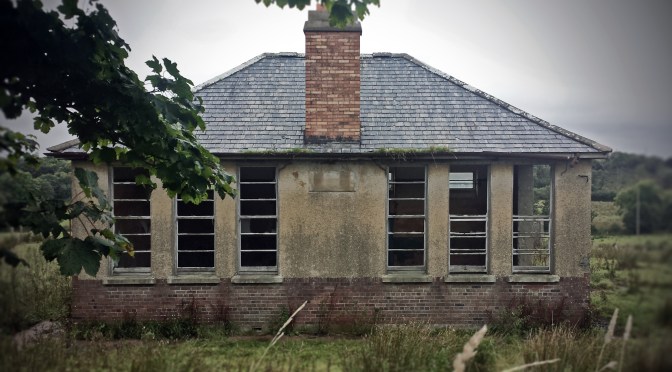
Munterneese National School, Munterneese townland, Co. Donegal

Munterneese National School, Munterneese townland, Co. Donegal
(Dated 1938)

NGR:183512, 375634

Located in the south of Co. Donegal, and on the northern shore of Donegal Bay, the village of Inver is sometimes referred to as the hidden jewel of the northwest. In recent years, the ‘Wild Atlantic Way’ coastal driving route has brought an increase in tourism to the area, with the parish being situated on the bay of Inver. Nonetheless it remains a quiet spot; rural in character with hilly and rough grazing land that is occasionally lashed by Atlantic winds and rain.

Although now quiet, the area was once home to an important whaling post during the 18th and 19th century, and a large whaling station and fleet was based in the Port of Inver, 2 km from the modern Inver Village.

Thomas and Andrew Nesbitt set up the whaling business in Donegal Bay in 1759. Thomas was the inventor of the gun-harpoon, which was witnessed by Arthur Young during his tour of Ireland 1776-1779, as he states: “From many experiments he brought the operation to such perfection that, for some years he never missed a whale, nor failed of holding her by the harpoon”.The ruins of the old whaling station still remain in the port but have eroded and deteriorated to rubble.

During the 19th century the area was busy enough to require a railway, and Inver railway station opened on 18 August 1893. However the final train passed through the station on 1 January 1960. It has been closed since.

Just a few kilometres east of Inver Village and situated to the south of the old railway tracks, are the townlands of Munterneese and Drumcoe. The townlands are sparsely populated today, though a quick glance at the historic mapping for the area shows that in the time since the publication of the First Edition Ordnance Survey 6 inch map series in the 1840s, there have been no less than four school houses constructed in this small area. Only two if these buildings remain today (both disused), and this blog post looks at the last of these to be constructed; a detached six-bay single-storey national school, dated 1938. Continue reading Munterneese National School, Munterneese townland, Co. Donegal

Lettermore National School, Lettermore townland, Co. Donegal

Lettermore National School, Lettermore townland, Co. Donegal
(Dated 1909)
NGR: 185124, 383735

Lettermore National School Co. Donegal (1909)

The island of Ireland is small but diverse. From the southwesternmost point at Mizen Head in Co. Cork, you need only travel about 550 km to reach the northerly tip of the country at Malin Head in Co. Donegal. But along that journey, you will witness a variety of landscapes, both physical and cultural – each different from the other in striking, or sometimes subtle ways. From productive mixed farmlands for both tillage and stock, to the mire of endless bog, the physical landscape has been shaped and manipulated, initially by geological process, and subsequently by the the people who have lived in it. Particularly in rural Ireland, the physical and cultural landscapes are entwined and form a narrative that is often not immediately clear, that requires an insight into, and interpretation of what shapes the lived experience of the world around you. In short, the landscape and what it contains tells the history of it’s inhabitants.

This blog post features the first abandoned school house from Co. Donegal (the northernmost county in Ireland) that I’ve visited, and it’s difficult to communicate the significance of the school without first placing this building in context.

Lettermore National School, Co. Donegal (1909)

The slogan ‘Up here it’s different’ has been used to promote tourism in, and attract tourists to the Donegal region in recent years. But what makes this area different? In terms of geography, Donegal is pretty similar to West Cork, Kerry and Connemara; a rugged western coastline shaped by the Caledonian Orogeny, and battered by the Atlantic Ocean, mountainous lands of blanket bog to the west, better, more productive lands to the east.

But Donegal different to these other places. Depending on your perspective, the circumstances of history have not done Donegal any favours other than to perhaps help preserve it’s striking landscape. The Partition of Ireland in the early 1920s had a massive direct impact on the county. Partition cut the county off, economically and administratively, from Derry, which had acted for centuries as it’s main port, transport hub and financial centre. But even before this, Donegal was one of the worst affected parts of Ulster during the Great Famine of the late 1840s. Vast swathes of the county were devastated by this catastrophe, many areas becoming permanently depopulated. Vast numbers of people emigrated at this time. Particularly in West Donegal, there was a spiral of decline from the 1900s onward, and what was once seasonal migration from the islands and highlands was replaced by more permanent migration to cities in Britain such as Glasgow.

Lettermore National School, Co. Donegal (1909)

The abandoned school house at Lettermore symbolises the recent history of the region, and the story of migration. Opened in 1909 to meet the educational needs of the local community, the school had a relatively short life. Continue reading Lettermore National School, Lettermore townland, Co. Donegal

Kilnaboy National School, Kilnaboy townland, Co. Clare

Kilnaboy National School, Kilnaboy townland, Co. Clare

(dated 1884)

NGR: 127450, 191785

Kilnaboy National School, Co. Clare - 1884
Kilnaboy National School, Co. Clare – 1884

Located near the village of Carron and the large turlough, (or seasonal lake) situated there, Kilnaboy National School sits in a landscape that is rich in historical and archaeological sites, with more than 90 megalithic burial monuments in the area. However, the Burren also contains monuments from the more recent past: namely the vernacular architecture of the past two centuries.

Travelling from Corofin toward Leamenah, you will pass the little village of Kilnaboy (any fan of the Father Ted TV series will know this as the location of Craggy Island Parochial House). The village is most notable for its imposing eleventh-century church which is visible from the roadside, and so the quaint features if its eighteenth-nineteenth century streetscape is very often overlooked. In recent years, the former post office here has been turned into an exhibition space, aptly named ‘X-PO’. And close by is a former schoolhouse, built in 1884, but now derelict and empty. Continue reading Kilnaboy National School, Kilnaboy townland, Co. Clare

Girls and Boys…  (Heritage Week 2016 Series)

This is the sixth in the series of daily posts to the Disused School Houses blog to mark National Heritage Week 2016 (August 20th- 28th). Heritage Week is a multifaceted event coordinated by The Heritage Council that aims to aid awareness and education about our heritage, and thereby encouraging its conservation and preservation.

We shape our buildings, and afterwards our buildings shape us. – Winston Churchill

With the establishment of the Nationals Schools Act in 1831, there was an upsurge in the construction of school buildings across Ireland. I touched on this briefly a few weeks ago with a few paragraphs explaining why I think there are so many abandoned national schools scattered across the rural Irish landscape. Of course there were plenty of school buildings in Ireland prior to the 1831 Act, but after 1831, and particularly from the latter part of the 19th century onward, many school buildings were constructed to a standard design by the Office of Public Works (OPW). The architecture of these buildings reflect many of the social paradigms of the 19th and 20th century, and below I have included some brief notes relating to segregation by gender, the accepted canon in the majority of national schools in Ireland through this time.

Where resources and architecture allowed, multi-room school buildings generally divided their pupils, initially by age (with infant girls and boys being taught together), before the older school children were divided by sex. Where possible, girls and boys were taught in separate classrooms, or even separate school buildings.

The gender-segregated nature of many Irish schools is part of the legacy of the denominational origin and control of education since the 19th century. However, even today, Ireland is unusual in a European Context in that a large number of schools are still single-sex institutions at both primary and second level (42% of second level students attend single-sex schools, the majority of these being girls (Lynch 2004, 84).

Continue reading Girls and Boys…  (Heritage Week 2016 Series)

Why are there so many abandoned School Houses scattered across the rural Irish landscape? (Heritage Week 2016 Series)

image
Gortahoose National School, Co. Leitrim

This week (August 20th – 28th) marks National Heritage Week in Ireland. It is a multifaceted event coordinated by The Heritage Council that aims to aid awareness and education about our heritage, and thereby encouraging its conservation and preservation. As part of Heritage Week 2016 there are daily posts to the Disused School Houses Blog and this is the fifth post in the series.

For the past two years I’ve been casually photographing abandoned school houses around Ireland. I don’t have any explanation for why I began doing this, but this hobby started by accident with no real projected outcome. I uploaded a few of my snaps to this blog and from there the project began to develop with a view to publication in the coming months. Matching my images with stories recorded in these abandoned schools by the Irish Folklore Commission in the 1930s, the now-empty buildings came to life once more.

Continue reading Why are there so many abandoned School Houses scattered across the rural Irish landscape? (Heritage Week 2016 Series)

Outdoor Conveniences (Heritage Week 2016 Series)

This is the fourth in the series of daily posts to the Disused School Houses blog to mark National Heritage Week 2016 (August 20th- 28th). With tongue-in-cheek I have chosen to re-visit the topic of primitive toilet facilities at the turn of the 20th century! Next time you utilise the convenience of indoor plumbing, keep in mind the fact that privys weren’t always so commodious!

Shanvaghera National School, Shanvaghera townland, Co. Mayo
Shanvaghera National School, Co. Mayo 1935

Particularly during the wintery time of year, it is worth bearing in mind the harsh conditions experienced by school children just a handful decades ago – when even the simplest of life’s necessities could be a test of endurance. With the onset of the winter rain, wind and snow, the luxury of indoor plumbing was generally beyond the expectation of most attending school at this time. When nature called, it was commonly necessary to brave the elements and venture outside to a cold and draughty detached toilet-block, usually located at the rear or to the side of the already cold and damp school house.

Scoil Cill Criosta - Scoil Naisunta, Co. Galway
Scoill Cill Criosta, Co. Galway 1931

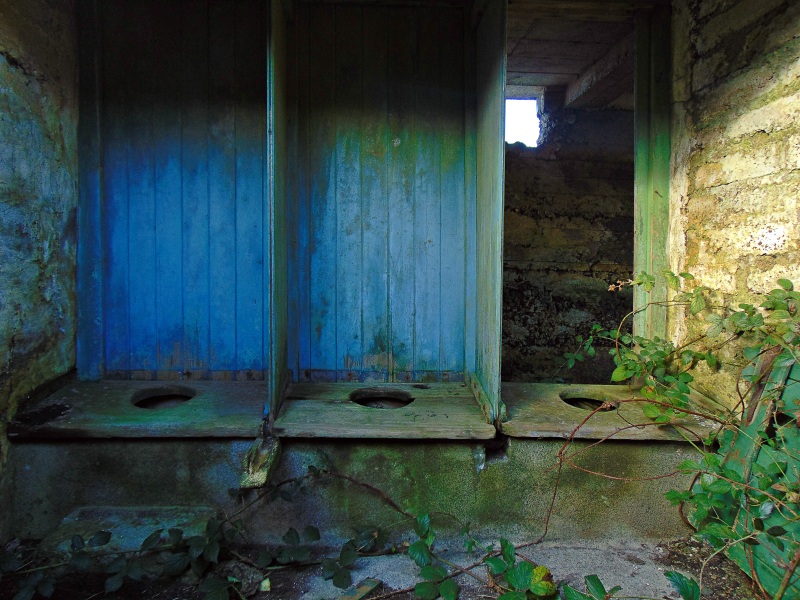
Through the 19th and into the 20th century, even the most basic plumbing in the outside toilet was not at all common, with dry-toilets being far more prevalent, particularly in rural Ireland. These dry-toilets varied in form and design. Generally, a single free-standing toilet block would be located at the rear of the school building and divided for male and female pupils; accessed through separate gender-assigned doorways. Occasionally, when a school yard was divided by sex, each side of a centrally located toilet block had an entrance allowing access from either the male or the female side of the yard.

Continue reading Outdoor Conveniences (Heritage Week 2016 Series)

Gortnabinny National School, Gortnabinny townland, Co. Kerry
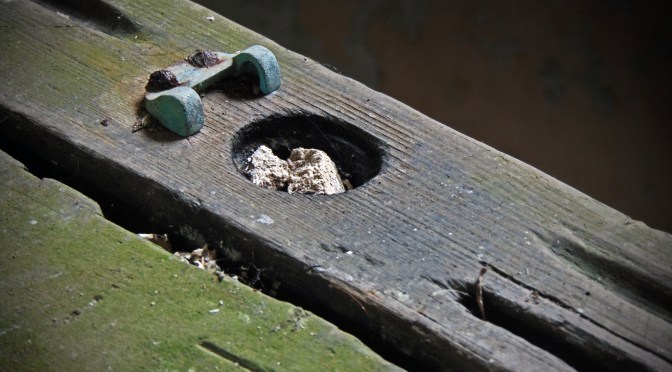
Gortnabinny National School, Gortnabinny townland, Co. Kerry

(dated: 1880-1898)

NGR: 091541, 063374

It’s a Sunday evening in late July in south Co. Kerry. The summer air is warm but heavy, and the sky is overcast though there are occasional bursts of sunlight through gaps in the temperamental cloud cover. This kind of weather is disappointingly common in Ireland at this time of year, with sporadic heavy showers of rain in between the dry spells. I’ve arrived at Gortnabinny townland, located about 10 km south of the town of Kenmare; a rural spot at the gateway to the Beara Peninsula.

The surrounding landscape is hilly; the ferns are a lush green colour, and in the damp, heavy warmth of the evening, the dense greenery and woodlands seem tropical. Earlier this day I had met Simon Linnell in Kenmare. He’s involved with a local cultural and historical research group in the town, and each year they publish the ‘Kenmare Chronicle’, a journal dedicated to documenting various aspects of the local heritage. He tells me that this year the group have been researching the many disused school houses located in the area, and has given me a hand-drawn map which shows the locations of the schools he’s identified. Gortnabinny is my last stop on Simon’s map. 

Leaving the humid roadside which is arched by a canopy of the most vibrant green deciduous trees, I make my way up a low knoll and through the wet woodlands; toward the crest of the hill I can see the remnants of single-storey building hidden behind pine palms, dripping after the most recent sun shower. 

Gortnabinny NS Co. Kerry View.jpg

Continue reading Gortnabinny National School, Gortnabinny townland, Co. Kerry

Killymarly National School, Killymarly townland, Co. Monaghan

Killymarly National School, Killymarly townland, Co. Monaghan

(dated c.1840)

NGR: 270176, 333199

Killymarly NS, Co. Monaghan c1850 Exterior

Travelling east from Monaghan Town toward the border between the Republic and Northern Ireland, there is a small rural townland named Killymarly located on the northern side of the N 72. The surrounding landscape is characterised by elongated low drumlin hills, interspersed with damp bog-lands and small lakes. On the western side of one of these low drumlins, and set just off a narrow local road, are the crumbling remains of a two-storey school house dating to the mid-19th century. The building is marked on both the First Edition 6 inch Ordnance Survey Sheet (1834-1846), and the later 25 inch Ordnance Survey Sheet (dating to the turn of the 20th century), and the school was probably constructed in the 1840s.

Continue reading Killymarly National School, Killymarly townland, Co. Monaghan

Laughil National School, Rabbitpark townland, Co. Longford

Laughil National School, Rabbitpark townland, Co. Longford

(dated c.1937)

NGR: 217408, 270367

Laughil, Co. Longford 1937External

The townland of Rabbitpark is located to the south-east of Longford Town in Co. Longford. Rural in character, the surrounding landscape is barren and of low quality.  Like the environment surrounding Drumlish National School and Gaigue National School in the same county, farming remains important to the local economy, though rural life has changed, and the hustle-and-bustle of the market town is no longer what it used to be.

Laughil, Co. Longford 1937 Classroom

This school house was built in 1937. Looking at the First and Second Edition Ordnance Survey sheets, it can be seen that this is not the first National School built at this site, and that this building replaced an earlier school house built sometime before the First Edition Ordnance Survey in the late 1930s.

Continue reading Laughil National School, Rabbitpark townland, Co. Longford