The School House in Ireland: Architecture and Meaning – Part 2

The School House in Ireland: Architecture and Meaning (contd…)

What makes a building important?

Contemporary 19thand early 20th-century sources in Britain and the US (Bernard 1848; Patterson 1875; Shawkey 1910) provide, first-hand insights into the ideological and societal backgrounds behind school architecture of the period. In Britain Weiner (1994) dedicates significant wordcount to architecture and social reform in late-Victorian London from the perspective of school design, however it is part of an over-arching examination of the subject as a whole. Similarly, Avery (2003) presents a comprehensive overview of Victorian and Edwardian architecture in Britain which includes dedicated passages relating to school houses designed and constructed during this period. Both publications treat the physical and architectural environments in their historical contexts, offering a late-20th century perspective on the impact of Victorian and Edwardian reform on architecture. However, neither publication is concerned with the modern-day significance of these buildings to the modern-day populations which engages with them on a daily basis. To be fair to both publications, such a consideration is well beyond their assigned academic remit.
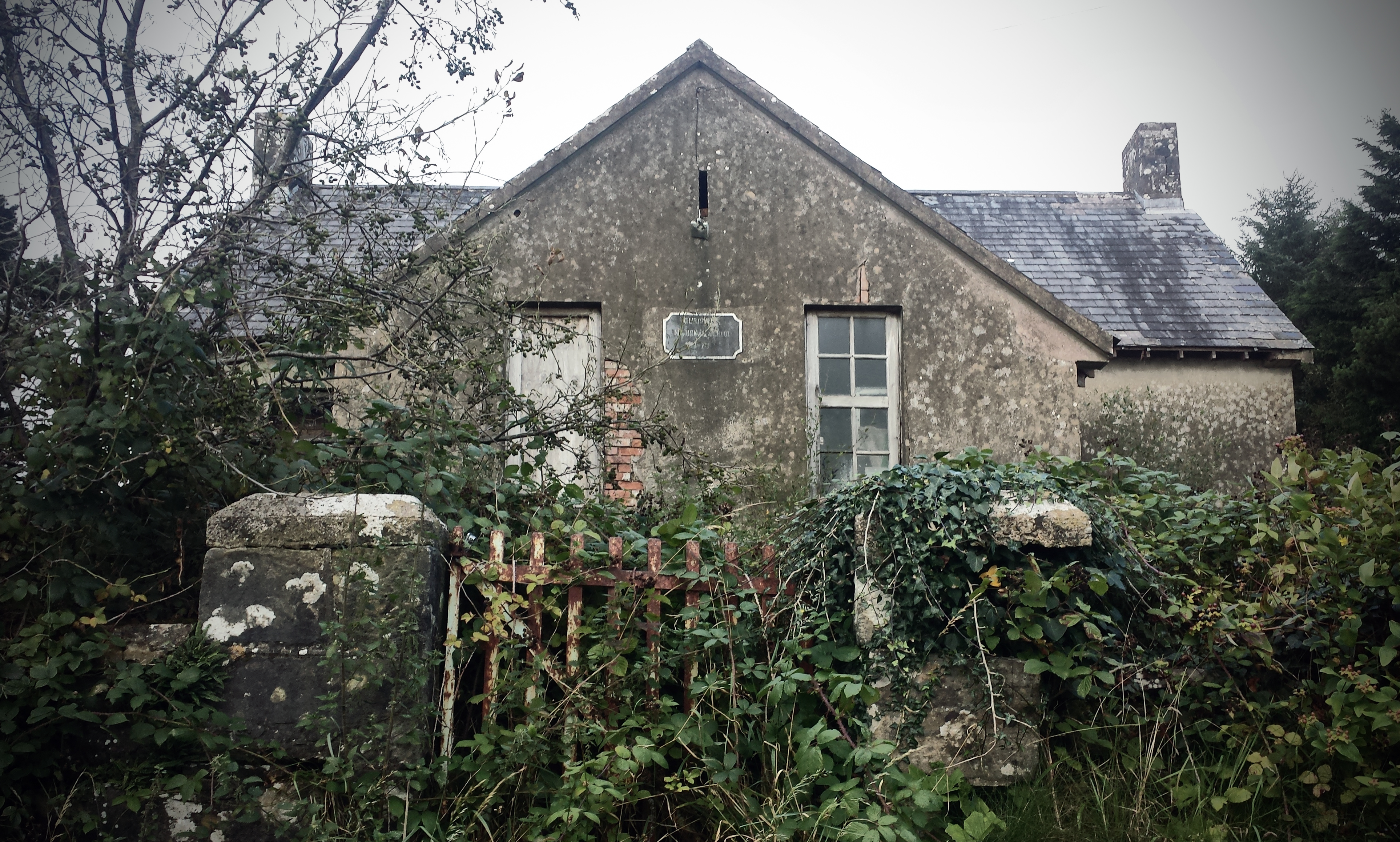
Gurtovehy National School, Gortaveha townland near Lough Greaney in Co. Clare This school house was built in 1920 to replace an earlier school house that was located nearby

What is important to consider is that these and other studies have been primarily concerned with ‘Architectural Interest’ from all almost exclusively historical architectural perspective. They fail to draw upon or recognise the identical social significance of many similar buildings that have served the same institutional function, but were perhaps of a lesser intrinsic architectural value for a variety of reasons (date, originality of design etc.). Hence, these buildings have been overlooked.  In defining a building to be of ‘Architectural Interest’, Historic England have condensed the general principles applied by the Secretary of State under the Planning (Listed Buildings and Conservation Areas) Act 1990 (DCMS 2010) to this simple statement:

‘To be of special architectural interest a building must be of importance in its architectural design, decoration or craftsmanship; special interest may also apply to nationally important examples of particular building types and techniques (e.g. buildings displaying technological innovation or virtuosity) and significant plan forms.’ – Historic England 2017 Continue reading The School House in Ireland: Architecture and Meaning – Part 2

The School House in Ireland: Architecture and Meaning – Part 1

The School House in Ireland: Architecture and Meaning

Henry Glassie is a professor of folklore at Indiana University in the United States. He has published extensively on the topic of material culture, and in the 2000 he published a book that was simply titled Vernacular Architecture. Glassie’s publication drew on his three decades of observations of vernacular architecture from around the world, and showed that common buildings, and the meanings and associations attached to them, contributed to a more democratic telling of history. Glassie viewed buildings like poems and rituals, in that they realise culture and reflect in a material way, the thoughts, beliefs and experiences of the people that design, build and use them. Of course, this is true about all architecture, not just the vernacular traditions. But what do we mean when we talk about vernacular architecture, and are school houses vernacular structures, or imposing institutional buildings?

Vernacular architecture exists everywhere there are human populations around the world. It can’t be defined as a particular architectural style that you might recognise like Baroque or Neo-Classical, but rather a building paradigm where the arrangement of the structure is the simplest form of addressing human needs. It is a pure reaction to an individual person’s or society’s building needs, and has allowed everyday people, even before the architect, to construct shelter according to their circumstance. Some are the exotic products of indigenous people in places unknown to us. But others are familiar, maybe too familiar, and so are overlooked and unappreciated. This is the case with many of the school houses featured here.

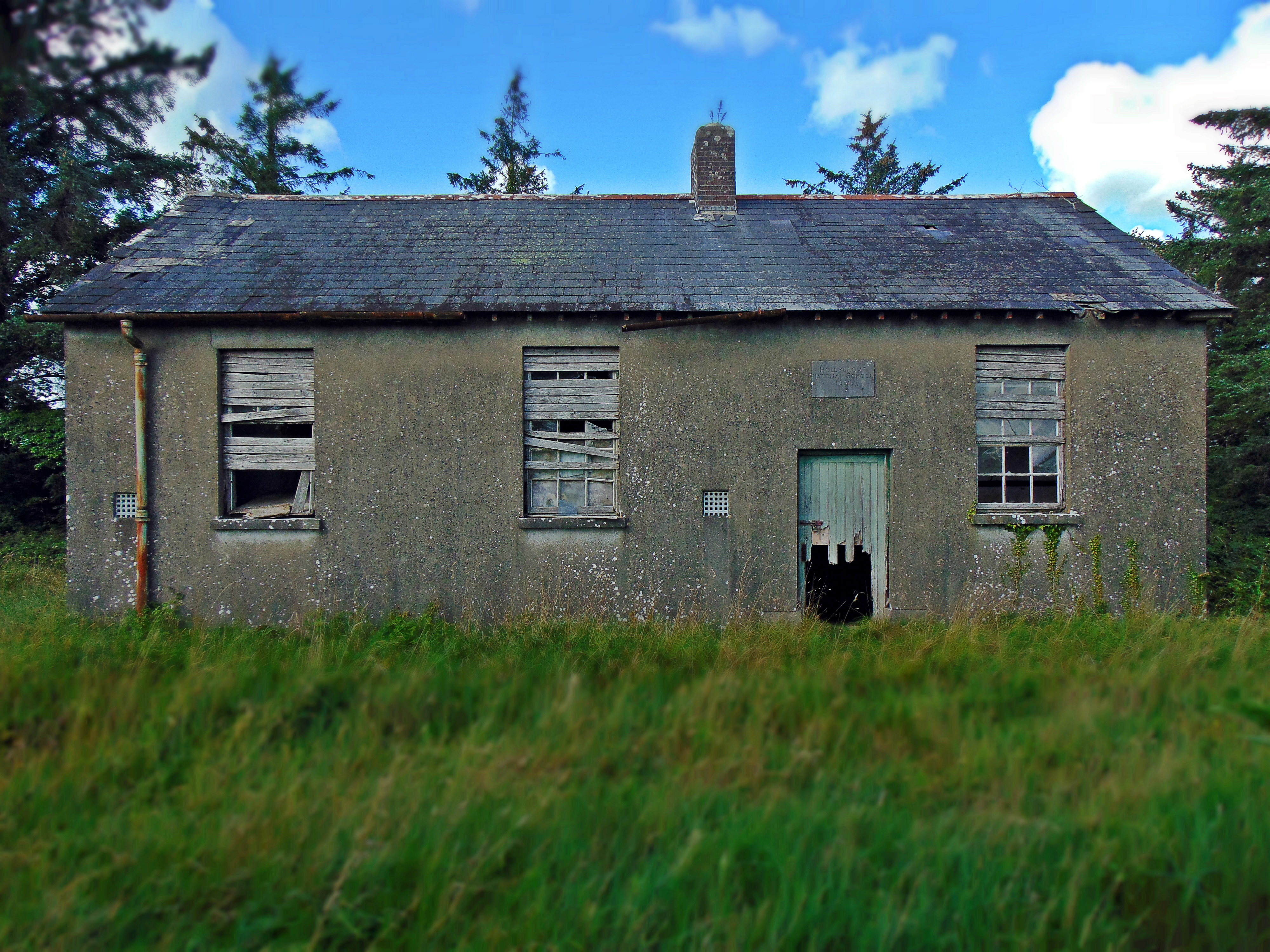
Hollygrove National School, Hollygrove townland, Co. Galway (dated 1899). This plain two-room school house is a fine example of one of the most simplistic ‘factory school’ designs supplied by the OPW at the turn of the 20th century. Despite their pivotal role in education in rural Ireland at the time, many of these buildings are not recorded in the National Inventory of Architectural Heritage

Vernacular buildings are composed of local materials. The meanings that lie in the selection of materials are social and economic as well as environmental, and the buildings very much reflect the local area and its people. They can tell us a lot about the people that constructed them. As Glassie states; ‘culture gathers into an inner resource of association and gathers order aesthetically, by which he means that the landscape and how people view and experience the world is reflected in what they build and create. With the act of physical alteration that calls time into space implying a past and a future, and with the walls that divide space, at once including and excluding, architecture has happened’ (ibid.). Architecture gives physical form to names and claims, to memories and hopes. As a conceptual activity, architecture is a matter of forming ideas into plans, plans into things that other people can see. Architecture shapes relations between people. It is a kind of a communication (ibid.). Continue reading The School House in Ireland: Architecture and Meaning – Part 1